1. Rethinking Value: The Full-Life Economics of a Truck
For a long time, a view persisted among certain segments of African buyers — especially those whose earlier fleet experience was shaped by European marques — that Chinese commercial vehicles came with a trade-off: lower acquisition cost, shorter working life. While that perception had some basis in the early wave of exports during the 2000s, when quality control was inconsistent and after-sales infrastructure was virtually absent, the product landscape today tells a very different story.
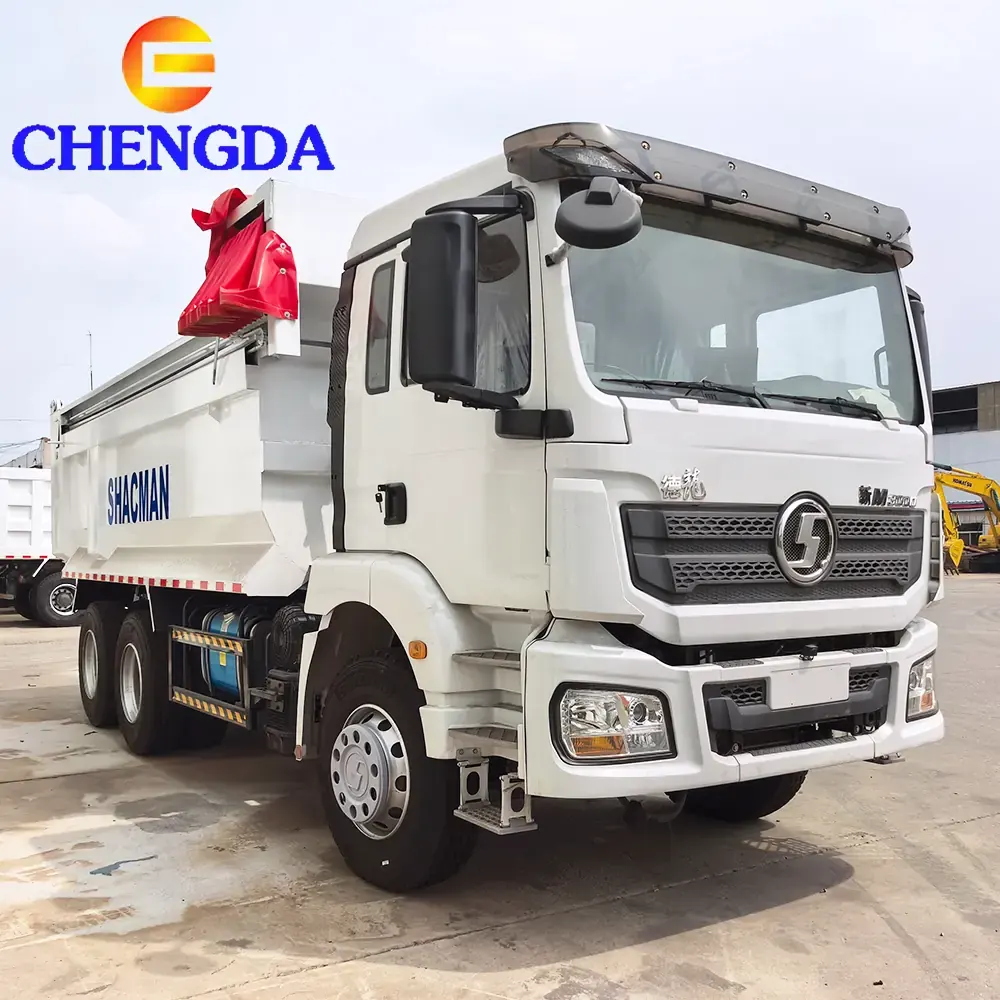
Major Chinese OEMs have undergone a generational upgrade in their engineering capabilities. Sinotruk's technology collaboration with MAN, Shacman's use of Weichai powertrains paired with Fast Gear transmissions, and Foton's integration of Cummins engine platforms are all examples of component strategies that draw on established global supply chains. These are not marginal improvements — they represent a deliberate shift toward reliability benchmarks that hold up under commercial scrutiny.
When fleet managers assess a vehicle purchase today, the relevant metric is not the sticker price alone; it is the total financial commitment over the ownership period: upfront capital outlay, routine servicing costs, unplanned repair frequency, parts lead time, fuel efficiency under load, and residual value. On a full-life cost basis, a well-specced Chinese heavy truck frequently delivers results that close the gap with premium European alternatives to a degree that many buyers find commercially decisive — particularly when capital budgets are finite and return horizons are measured in months rather than years.
2. The After-Sales Equation: Keeping Vehicles Moving
Downtime is the silent profit killer in any transport or construction operation. A truck that sits parked for ten days awaiting a replacement part is not just an idle asset — it is a missed delivery, a delayed project milestone, and a fixed cost that continues to accumulate. Historically, this was one of the sharper pain points for African operators relying on European-supplied fleets: parts had to be ordered from the manufacturer's home market, lead times stretched into weeks, and the inventory held by local agents was thin outside major capital cities.
Chinese manufacturers have taken a different approach to market entry. Rather than treating Africa as a distant export destination served exclusively from a home-country warehouse, brands like Sinotruk and Shacman have invested in regional parts hubs and cultivated networks of local stocking distributors. In countries such as Kenya, Tanzania, Nigeria, and Ghana, it is now common to find off-the-shelf availability for high-wear items — brake pads, filters, clutch kits, suspension components. The operational impact of this difference is straightforward: shorter vehicle-off-road time translates directly into stronger fleet utilization rates, which feeds back into the procurement decision when it is time to order the next unit.
It is worth noting that this is not an argument that Chinese after-sales networks are universally superior. Rather, the point is that the gap that once existed — and that was a legitimate obstacle to adoption — has narrowed considerably, and in several important markets, has effectively disappeared.
3. Designed for the Environment, Not Against It
A point that does not always receive enough attention in procurement discussions is the basic matter of operating environment fit. A truck platform that performs superbly on the German Autobahn or the Dutch motorway network — optimized for speed, aerodynamics, and Euro-emissions compliance — may not be the ideal tool for a 200-kilometer unpaved haul route in equatorial temperatures with fuel of inconsistent quality.
Chinese heavy-truck engineering has been shaped by decades of domestic deployment across an extraordinarily diverse set of operating conditions: high-altitude Tibetan routes, desert mining basins in Xinjiang, humid subtropical construction zones in Southeast Asia. The design priorities that emerge from this experience — robust chassis architecture, simpler electrical and sensor configurations with fewer single points of failure, heavy-duty cooling packages, and generous ground clearance — are, as it happens, well aligned with the conditions that prevail across much of Africa.
This is not a claim that one design philosophy is "better" than another in absolute terms. It is, however, an observation that for fleet operators whose daily reality includes corrugated gravel roads, extended dry-season dust exposure, and maintenance facilities that are functional rather than dealership-grade, a vehicle engineered with those conditions in mind has practical advantages.
4. From Trading Agents to Professional Export Manufacturers
A significant part of the skepticism that once surrounded Chinese vehicle exports to Africa can be traced to the distribution model of the early years. During the 2000s and early 2010s, many transactions were handled by small, independent trading companies that had no manufacturing relationship, no quality assurance capability, and no long-term stake in the buyer's satisfaction. When problems arose — a hydraulic failure, a missing shipment — the buyer often had no meaningful recourse.
The contrast with today's professional export sector is substantial. Established players in the space — including Shandong Chengda Group, a certified National High-Tech Enterprise founded in 2005 — operate on an entirely different set of principles. These companies maintain direct procurement agreements with multiple OEMs including Sinotruk, Shacman, FAW, Foton, and XCMG. They perform independent pre-shipment inspections. They handle the full export documentation package — certificates of origin, bills of lading, EUR.1 or equivalent preferential trade documents where applicable. And they actively invite prospective clients to visit the production lines, inspect vehicles, and verify quality standards before committing funds.
For the African buyer, this distinction between a trading intermediary and a professionally managed export manufacturer is not academic. It is the difference between a transaction and a business relationship.
5. Single-Source Supply: Reducing Complexity in Multi-Equipment Projects
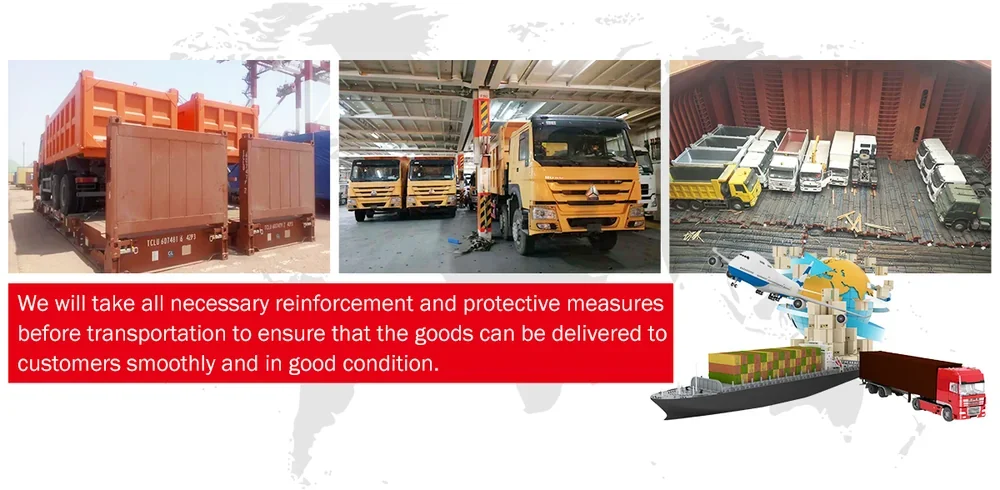
Infrastructure and mining projects rarely require a single vehicle type. A typical site setup might involve tipper trucks for material movement, a lowbed trailer for relocating excavators, a fuel tanker for on-site refueling, a water bowser for dust management, and a concrete mixer for foundation work. Sourcing each category from a different supplier — potentially in different countries — multiplies the logistical complexity: multiple shipping schedules to coordinate, multiple sets of import documentation to reconcile, and multiple after-sales contacts to manage.
The integrated supply model that has developed among leading Chinese exporters addresses this problem directly. When a single company can deliver dump trucks, semi-trailers, tankers, mixers, construction machinery, and spare parts — consolidated into one shipment with unified documentation — the administrative overhead for the importer drops significantly. After delivery, the buyer deals with one point of contact for technical support and parts reordering. The efficiency gains are practical and immediate.
Closing Perspective
The growing adoption of Chinese heavy-duty vehicles across African markets is best understood not as a sudden disruption but as a cumulative outcome of multiple reinforcing trends: product quality improvement, after-sales infrastructure investment, engineering adapted to real-world conditions, the professionalization of export channels, and supply-chain consolidation. None of these factors alone would have been sufficient to drive the shift. Together, they have reshaped the procurement calculus for a wide range of fleet operators.
Every business has its own specific requirements — financing structure, terrain profile, maintenance capability, and brand familiarity all influence the final decision — and no single source of supply is universally optimal. The evidence from the ground, however, suggests that Chinese heavy-duty vehicles have secured their position in the African market on genuine competitive grounds, and the direction of travel points toward continued expansion.