How Do You Match a Tractor Truck to Your Semi-Trailer Type, Fifth Wheel, and Towing Capacity?
Matching a tractor truck to your semi-trailer starts with three checks: GCWR must exceed the loaded combination weight, the fifth wheel and kingpin must couple securely, and axle configuration must fit the load. A 6x4 handles heavy haul, a 4x2 suits lighter urban runs, and legal limits typically allow 34,000 pounds on tandem axles and 12,000 pounds on a steer axle.
Start with Gross Combination Weight Rating. If a trailer and cargo weigh 60,000 pounds and the power unit adds 18,000 pounds, total weight reaches 78,000 pounds, so the GCWR must exceed that figure. Sliding the fifth wheel shifts weight between the steer and drive axles, helping a Shacman X3000 tractor truck stay within legal limits.
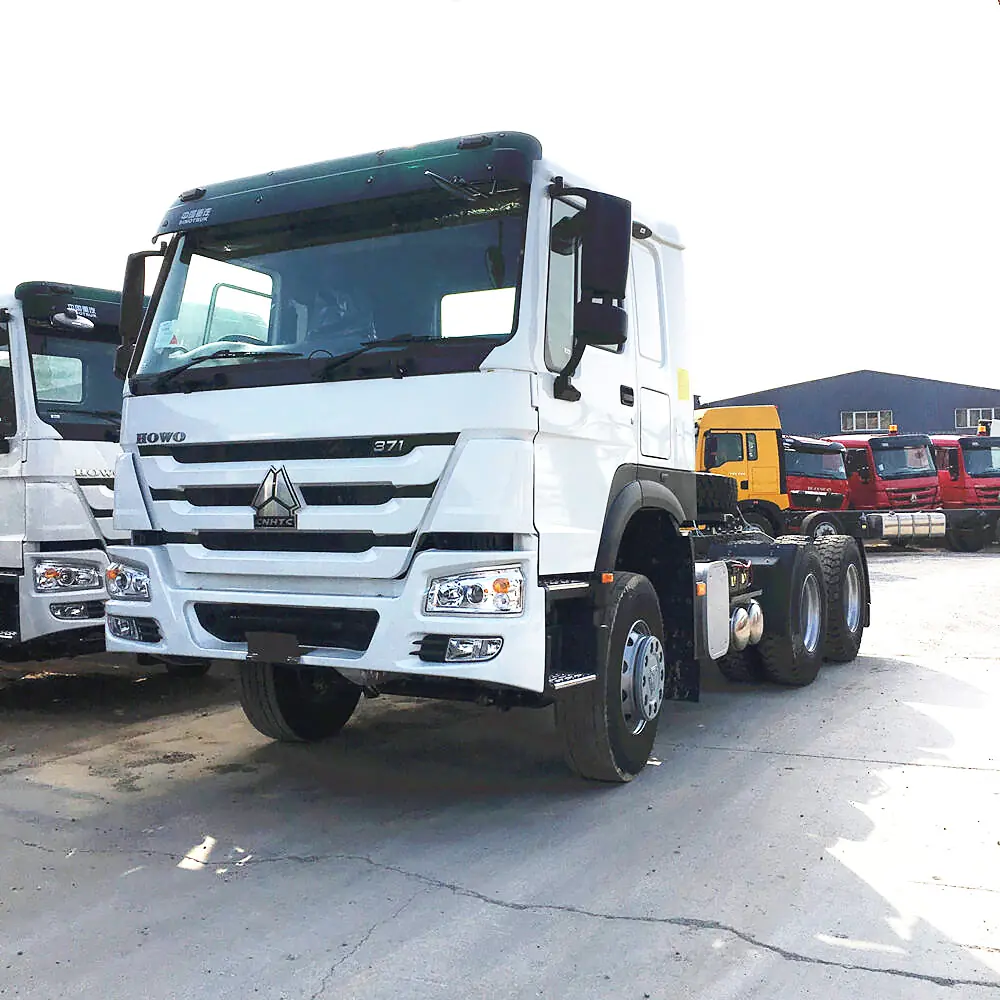
Drive axle configuration decides legal and safe capacity. A 4x2 suits urban delivery and light loads, while a 6x4 is mandatory for heavy haul and adverse weather, distributing pin weight over a larger area. Engine displacement should also align with GCWR, from 13-liter regional units to 15-liter blocks, as found in a Howo 371hp 6x4 tractor truck.
 |  |  |
Matching begins with the Gross Combination Weight Rating (GCWR), which represents the absolute maximum allowable weight of the loaded power unit and its loaded attached trailer. If your trailer and cargo weigh 60,000 pounds and your power unit weighs 18,000 pounds, your total weight hits 78,000 pounds, so your GCWR must exceed that number. Manufacturers determine this rating from chassis structural integrity, engine braking capacity, drivetrain strength, and suspension limits, which is why running above it tears up U-joints, overheats transmissions, and creates liability risks during braking events.
Axle configuration and fifth-wheel placement then decide how that weight is actually carried. A 6x4 tandem-axle tractor is mandatory for heavy haul, off-highway logging, and soft terrain because the tandem drive axles spread pin weight over a larger surface area, while a 4x2 suits urban delivery and light volume loads with lower tare weight and better fuel economy. A sliding fifth wheel lets you shift the pivot point forward to transfer weight to the steer axle or backward to move it onto the drive axles, keeping the steer axle near 12,000 pounds and the tandem group near 34,000 pounds under the Federal Bridge Gross Weight Formula. For long-haul and heavy-haul operations, a Howo NX tractor truck can be configured so engine displacement, gearing, and wheelbase align with your calculated GCWR.
Matching Axle Configuration and Legal Weight to Your Semi-Trailer Type
Drive axle configuration fundamentally dictates what a tractor truck can legally and safely haul. A 4x2 single axle setup suits urban delivery, LTL freight and light volume loads, offering lower tare weight, a better turning radius and higher fuel economy, but it comes with limited traction and lower maximum legal weight capacity. A 6x4 tandem axle is the standard for long haul, heavy haul, flatbed work and adverse weather, delivering maximum traction, higher legal weight limits and better stability, at the cost of heavier tare weight, increased tire wear and lower fuel economy. A 6x4 configuration is mandatory for heavy haul applications, off-highway logging and soft terrain, because the tandem drive axles distribute the immense pin weight over a larger surface area, preventing axle overload and ensuring adequate grip.
Weight compliance follows the Federal Bridge Gross Weight Formula, which sets the maximum allowable weight based on the number of axles and the distance between them. A standard tandem-axle setup typically allows 34,000 pounds, while a single steer axle generally handles 12,000 pounds, so you must use certified scales to verify that neither the steer, drive nor trailer axles exceed their legal limits. Sliding the fifth wheel or the trailer tandems shifts weight between axle groups to reach compliance. Gross Combination Weight Rating must also exceed the loaded combination: if a trailer and cargo weigh 60,000 pounds and the power unit weighs 18,000 pounds, total weight reaches 78,000 pounds, and the GCWR must be above that number. Operating above the specified GCWR causes accelerated drivetrain wear and severe liability risks during braking events.
| 4x2 (Single Axle) Use Case | Urban delivery, LTL freight, light volume loads; lower tare weight, better turning radius, higher fuel economy; limited traction and lower legal weight capacity |
| 6x4 (Tandem Axle) Use Case | Long haul, heavy haul, flatbed, adverse weather; maximum traction, higher legal weight limits, better stability; heavier tare weight and lower fuel economy |
| Single Steer Axle Legal Load | 12,000 pounds |
| Standard Tandem-Axle Legal Load | 34,000 pounds |
Axle Configuration and Weight Distribution: Matching GCWR to Your Trailer Load
Gross Combination Weight Rating sets the ceiling for every matching decision. It is the maximum allowable weight of the loaded power unit plus its loaded attached trailer, and it is determined by chassis structure, engine braking capacity, drivetrain strength, and suspension limits. If your trailer and cargo weigh 60,000 pounds and your power unit weighs 18,000 pounds, the combination totals 78,000 pounds, so your GCWR must exceed that figure. Running above the rating accelerates drivetrain wear and creates serious liability during braking events. Drive axle configuration then decides what the rig can legally and safely haul. A 4x2 single axle setup offers lower tare weight, a better turning radius, and higher fuel economy, which suits urban delivery, LTL freight, and light volume loads, but it brings limited traction and a lower maximum legal weight capacity. A 6x4 tandem axle setup delivers maximum traction, higher legal weight limits, and better stability for long haul, heavy haul, flatbed work, and adverse weather, at the cost of heavier tare weight, increased tire wear, and lower fuel economy.
Legal compliance depends on spreading that weight correctly. A standard tandem axle setup typically allows 34,000 pounds, while a single steer axle generally handles 12,000 pounds, and the Federal Bridge Gross Weight Formula sets maximum allowable weight by the number of axles and the distance between them. Sliding the fifth wheel moves the pivot point: forward transfers weight to the steer axle, backward shifts it to the drive axles, which is how operators balance uneven loads and pass weigh station checks. Refrigerated trailers complicate this further, because the cooling unit mounted on the front wall raises kingpin weight and pushes more mass onto the steer and drive axles. Certified scales should confirm that neither the steer, drive, nor trailer axles exceed their limits before the combination goes into service.
78,000 lbs Example loaded combination weight — 60,000 lbs trailer and cargo plus an 18,000 lbs power unit | 34,000 lbs Typical legal weight allowed on a tandem axle group | 12,000 lbs Typical legal weight allowed on a single steer axle |
Matching Semi-Trailer Types: Dry Vans, Reefers, Flatbeds, and Tankers
Enclosed trailers create different matching demands depending on whether freight volumes out or weighs out. Dry vans carrying lightweight consumer goods typically fill all available cubic space before reaching maximum weight limits, so a lighter power unit maximizes efficiency in these volume-out scenarios. Refrigerated trailers add a complication: the heavy cooling unit mounted on the front wall significantly increases kingpin weight, pushing more mass onto the drive and steer axles. Proper fifth-wheel positioning becomes critical when pulling reefers to prevent overloading the steer axle and causing premature tire wear or steering component failure.
Open-deck equipment handles concentrated loads that demand different structural preparation. Flatbeds carrying steel coils, concrete barriers, or heavy machinery endure massive point loads rather than weight spread evenly across the floor, so the pulling unit needs heavy-duty suspensions and appropriate frame ratings. Step deck and heavy haul combinations require a reinforced frame, higher capacity drive axles, and specialized gearing to initiate movement with extreme payloads. Tankers introduce the physics of liquid surge and a high center of gravity, making roll stability control and electronic stability programs non-negotiable safety features. The suspension must resist body roll while cornering, and the fifth wheel must be properly maintained to prevent lateral slop that worsens trailer sway.
A US-based fleet running regional dry van routes had been pulling its trailers with a 4x2 tractor, and steer axle weight kept creeping toward the 12,000-pound mark whenever a heavier load was coupled. After working through axle loadings against the Federal Bridge Gross Weight Formula, the team switched to a 6x4 tandem configuration and repositioned the fifth wheel, shifting pin weight back onto drive axles rated for 34,000 pounds. With the loaded combination at 78,000 pounds and well inside its GCWR, the fleet stopped fighting weigh-station violations and reduced premature steer tire wear.