HOWO vs Shacman Tractor Head: Which Heavy-Duty Prime Mover Fits Your Operation?
Engine Platforms — MAN Lineage vs Weichai Power
HOWO powertrains are built on engineering inherited from MAN's D20 and D26 families, developed through Sinotruk's partnership with the German manufacturer. The most common output ratings sit at 371hp, 380hp, 400hp, and 430hp. These engines are tuned with a focus on thermal efficiency and lower diesel consumption at steady highway speeds — a characteristic that benefits fleets running long intercity corridors.
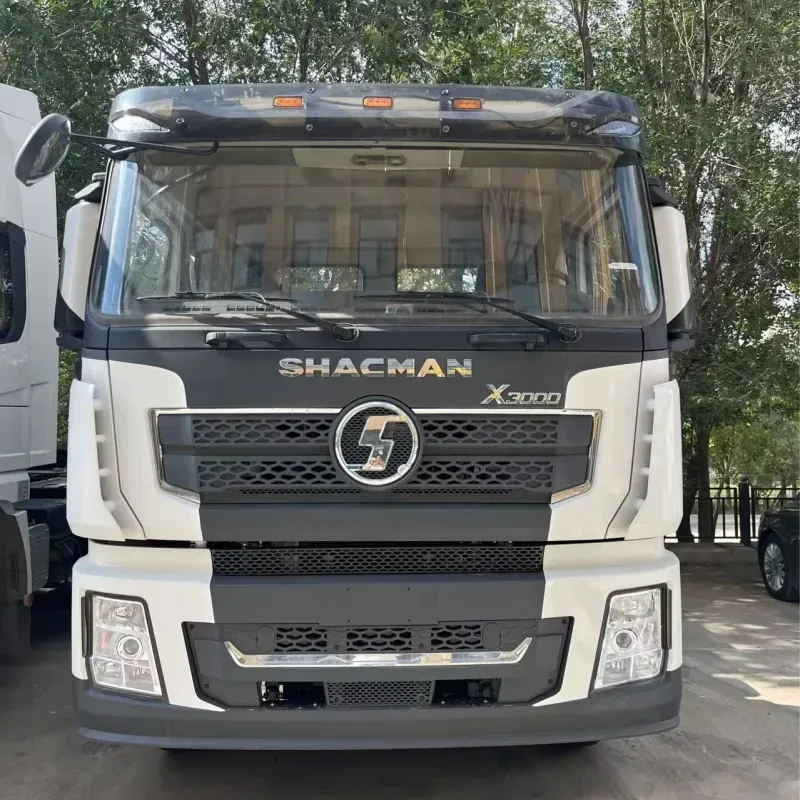
Shacman relies almost entirely on Weichai — the largest standalone diesel engine builder in China. Power outputs range from 336hp to 430hp, delivered through the WP10 and WP12 engine families. Weichai units have earned a reputation for tough construction and the ability to run reliably on diesel with varying sulfur levels, which matters in regions where fuel standards are not uniform.
Takeaway: HOWO may hold a slight advantage in motorway fuel consumption. Shacman may prove more forgiving where fuel quality fluctuates. Neither platform is categorically ahead of the other.
Gearboxes — Mixed Supply vs Fast Gear Standardization
HOWO transmissions differ by configuration — certain models carry Sinotruk's own gearboxes, while higher-grade variants may be fitted with ZF or Fast Gear units. Shacman, by contrast, standardizes almost entirely on Fast Gear, the largest heavy-truck transmission manufacturer in China. Because Fast Gear supplies multiple Chinese OEMs, transmission overhaul parts and service knowledge are widely accessible — a practical bonus for mixed-brand fleets.
Frame Construction — Twin-Layer vs High-Tensile Single Rail
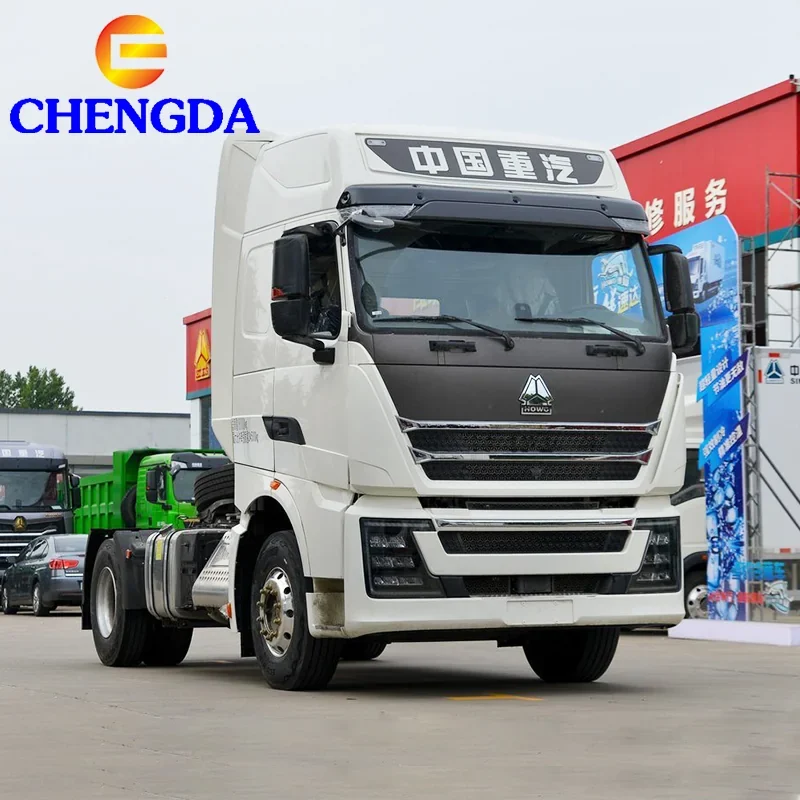
HOWO fits a double-layer chassis rail across most of its heavy-duty tractor range. The design bias is toward maximum structural endurance under severe loads and on badly corrugated surfaces. Shacman takes a different approach, using a reinforced single-layer rail fabricated from high-tensile steel — lighter, yet strong enough for rated trailer weights. The weight reduction frees up payload allowance within legal gross combination mass limits, an important consideration for operators running on sealed highways where every kilogram of cargo capacity affects revenue.
Driver Environment
HOWO cabins, especially in the TX generation, have seen meaningful upgrades — improved acoustic treatment, a more driver-friendly dashboard layout, and a suspended seat as standard. Shacman's X3000 series offers a flat-floor interior that creates easier cab movement during long shifts. Both trucks deliver effective air conditioning suited to high-temperature climates. In practice, which cabin a driver prefers usually depends on personal fit rather than a clear design advantage on either side.
Spare Parts Reach — What Keeps the Truck Moving
A vehicle parked for two weeks waiting on a back-ordered component erases any fuel-saving advantage the other brand might offer.
HOWO draws on Sinotruk's deep parts infrastructure across Africa — regional distribution hubs in Kenya, Tanzania, Nigeria, Ghana, and Zambia mean fast-moving wear items are often available from local stock. Independent spare parts outlets also carry HOWO components, reflecting the brand's presence over more than 15 years on the continent.
Shacman's authorized network is well developed in several West and Central African countries but is less evenly spread than HOWO's. That said, Weichai and Fast Gear components are used across numerous Chinese truck brands, opening alternative supply routes outside Shacman-only dealers — a meaningful backup in areas where the official dealer footprint is lighter.
Lifetime Running Costs
Upfront purchase prices for similarly rated HOWO and Shacman tractors sit in a comparable bracket. The longer-term differences appear across the ownership cycle:
Diesel consumption: HOWO's MAN-based engines may produce slightly lower fuel burn on extended highway operations at high yearly distances.
Component pricing: Shacman's high-volume Weichai and Fast Gear parts can be more affordable for major engine and gearbox work.
Used-market value: HOWO currently enjoys stronger resale values in many African countries, supported by wider brand familiarity.
Operational uptime: Local parts availability outweighs every other cost variable. A truck repaired and back earning in 48 hours outperforms a technically finer machine that stays off the road for three weeks.
Which Brand for Your Operation?
HOWO is likely the stronger pick if:
Your country has dense Sinotruk dealer and parts coverage
Motorway fuel efficiency ranks as a key fleet metric
Residual value is important to your replacement cycle
Your current fleet already runs HOWO — single-brand parts inventory saves money
Shacman is likely the stronger pick if:
Shacman's local dealer presence is well-established in your region
Cross-brand powertrain parts (Weichai and Fast Gear) give you supply flexibility
Maximizing legal payload is a core requirement — the lighter frame counts
Your fleet already includes other Chinese makes that use the same engine and gearbox platforms
Summing Up
HOWO and Shacman are both field-proven tractor platforms, with thousands of units in daily service across Africa and Latin America. The right decision turns on practical realities — parts access where you operate, the fuel quality on your typical routes, how much payload matters to your margins, and whether brand consistency across your fleet reduces maintenance complexity. Do not let a minor sticker-price gap or brand preference override those operational factors. Check local parts support for both brands, and where possible, talk to fleet owners nearby who run each one.
For detailed specifications, current pricing, and port-delivery options on HOWO and Shacman tractor heads, reach out to the Shandong Chengda Truck Trailer team.