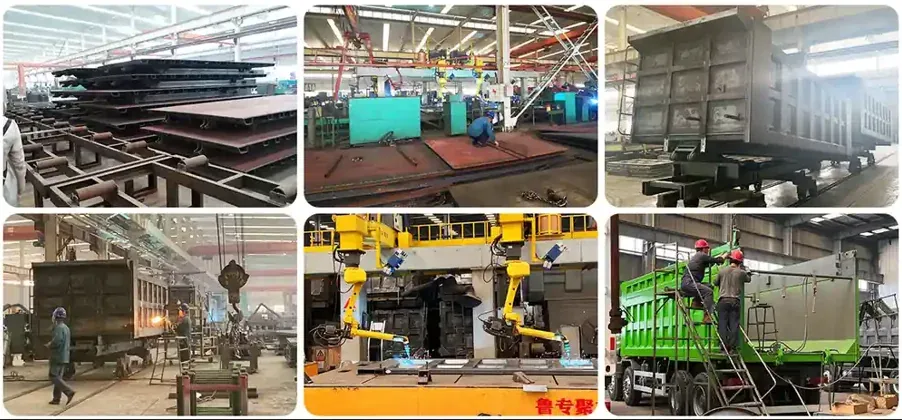
Why a New Dump Truck Might Be Worth the Higher Cost
Cost Certainty for the First Operating Year
A factory-fresh dump truck — take a HOWO 8×4, a Shacman F3000 6×4, or a Foton Auman EST as examples — starts with zero accumulated wear. Tires are unworn. Brake pads are at full thickness. The clutch has no hours on it. Engine oil, transmission fluid, and hydraulic oil are clean and new. The first scheduled major service is far enough away that you can forecast running costs with reasonable accuracy. For a project where the budget has no room for surprises, that kind of predictability is worth paying for.
Warranty Protection Against Major Failures
New vehicles ship with a manufacturer's warranty that absorbs the cost of major component failures — engine, gearbox, drive axles — for a set period or distance. If your operation lacks a heavy-duty workshop capable of pulling an engine or rebuilding a transmission in-house, a warranty acts as a financial backstop. A used truck offers no equivalent protection. If the engine seizes or the gearbox fails, every dollar of the repair lands on your books.
Newer-Generation Engineering
Chinese truck OEMs update their model lines continuously. A HOWO or Shacman dump truck rolling off the line today includes refinements that older generations simply did not have — higher-pressure common-rail fuel injection, more responsive turbocharger mapping, upgraded corrosion treatments, simplified wiring looms. Over several years of operation, even modest fuel efficiency gains compound into meaningful savings that help close the gap against the higher initial purchase price.
Configuration to Your Exact Needs
When you order new, you specify the truck's DNA: engine horsepower rating, transmission type and gear count, axle ratio, dump body dimensions and steel thickness, tire category, and optional extras. The finished vehicle arrives configured precisely for your operation — perhaps with high-altitude engine tuning for sites in the Andes or Ethiopian highlands, or a heavy-duty cooling package for desert deployments. A used truck gives you whatever spec the previous owner chose, and you adapt around it.
Better Access to Equipment Finance
Banks and asset finance providers price risk into their loan terms. A new truck is easier for them to value, easier for you to insure, and carries less risk of catastrophic failure during the loan period. As a result, new-vehicle financing typically comes with lower interest rates and longer repayment windows. If you are borrowing to buy, the advantage of new over used on the financing side can shrink the apparent price gap by more than you might expect.
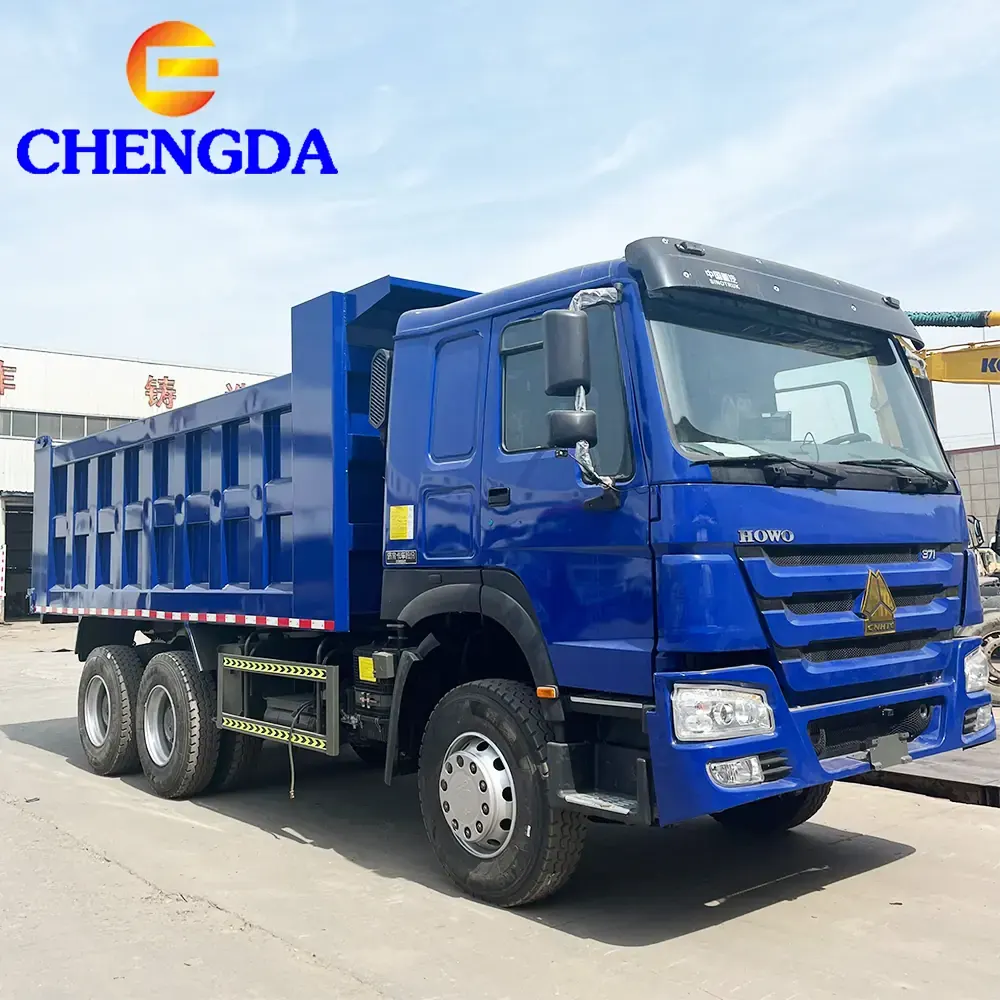
When a Used Dump Truck Is the Smarter Play
Less Money Tied Up at the Start
The headline argument for buying used is straightforward: the purchase price is significantly lower. A well-kept used HOWO 8×4 dump truck costs far less than its brand-new counterpart. For a business with tight working capital, or for a project whose duration is measured in months rather than years, freeing up that capital can be a game-changer — the money not absorbed by the vehicle goes into fuel, crew wages, site mobilization, or an extra piece of equipment.
Immediate Availability
Ordering a new truck from the factory means waiting — production scheduling, manufacturing lead time, and ocean freight to the discharge port. A used unit that is already built, inspected, and sitting in stock can be loaded onto a vessel within days. When the project site is ready and the clock is ticking, "available now" can easily outweigh "built to spec later."
The Biggest Depreciation Hit Is Behind You
The steepest drop in a vehicle's market value happens during its first twelve months of service. With a used truck, the previous owner absorbed that initial depreciation. If you plan to sell the truck once your project wraps up, the gap between what you paid and what you recover is typically narrower than it would be for a new truck — assuming you maintain it properly during your ownership period.
A Service History Tells You What You Are Getting
A used truck with complete maintenance logs is, in some ways, less of a mystery than a brand-new unit. The records show you which components have been replaced, what recurring issues (if any) have surfaced, and how consistently the previous owner followed service intervals. A new truck, by contrast, carries the small but real possibility of a manufacturing defect that reveals itself in the early operating months. A well-documented used truck has already proven itself across thousands of working hours.
Inspecting a Used Dump Truck — Areas That Deserve Extra Attention
A used truck is only a bargain if its mechanical condition justifies the price. Buyers who skip the inspection step are gambling, not saving. The critical checkpoints:
Engine health: Watch the exhaust on a cold start. Blue smoke points to oil entering the combustion chamber. Black smoke under acceleration suggests over-fueling or turbocharger issues. White smoke may indicate coolant leakage into the cylinders. If the seller allows it, a compression test across all cylinders is the most reliable health check available.
Hydraulic tipping system: The lift cylinder and hydraulic pump are among the costliest components to replace on a dump truck. Cycle the body through a full raise and lower, watching for hesitation, uneven lifting, or fluid seeping around the cylinder rod seal and hose connections.
Frame integrity: Walk the main chassis rails from cab to tail. Look for cracked metal, weld repairs, or deformation — especially near the rear body hinge mounts and suspension attachment points. A bent or repaired frame is a structural liability, not a cosmetic concern, particularly when running at maximum gross weight.
Driveline condition: On a road test, listen for grinding or whining from the gearbox during shifts. Confirm the clutch bites cleanly without slipping under load. Inspect universal joints and the center bearing on the driveshaft for play or dried-out grease.
Documentation: A seller who cannot produce service records is a seller you should be cautious about. Without logs, you cannot verify whether oil changes were done on schedule, whether the engine has a history of overheating, or whether major assemblies were ever replaced.
A Practical Decision Matrix
Rather than picking a side, match the choice to your circumstances:
A new truck is likely the better fit if:
Your contract or project runs three years or longer
You work far from major towns, with limited access to repair shops
Your team does not include an experienced heavy-vehicle mechanic
You are using equipment finance and can qualify for new-asset lending rates
Downtime carries a heavy penalty — you cannot afford unscheduled stoppages
You require a specific technical configuration that rarely appears on the used market
A used truck is likely the better fit if:
Your project wraps up within 18 months
Cash for the upfront purchase is the binding constraint
You employ skilled mechanics who can diagnose and repair in the field
You need trucks delivered to site in weeks rather than months
The used unit comes with verifiable maintenance records and clears an independent inspection
You are dealing with a supplier who offers some form of post-sale support even on used equipment
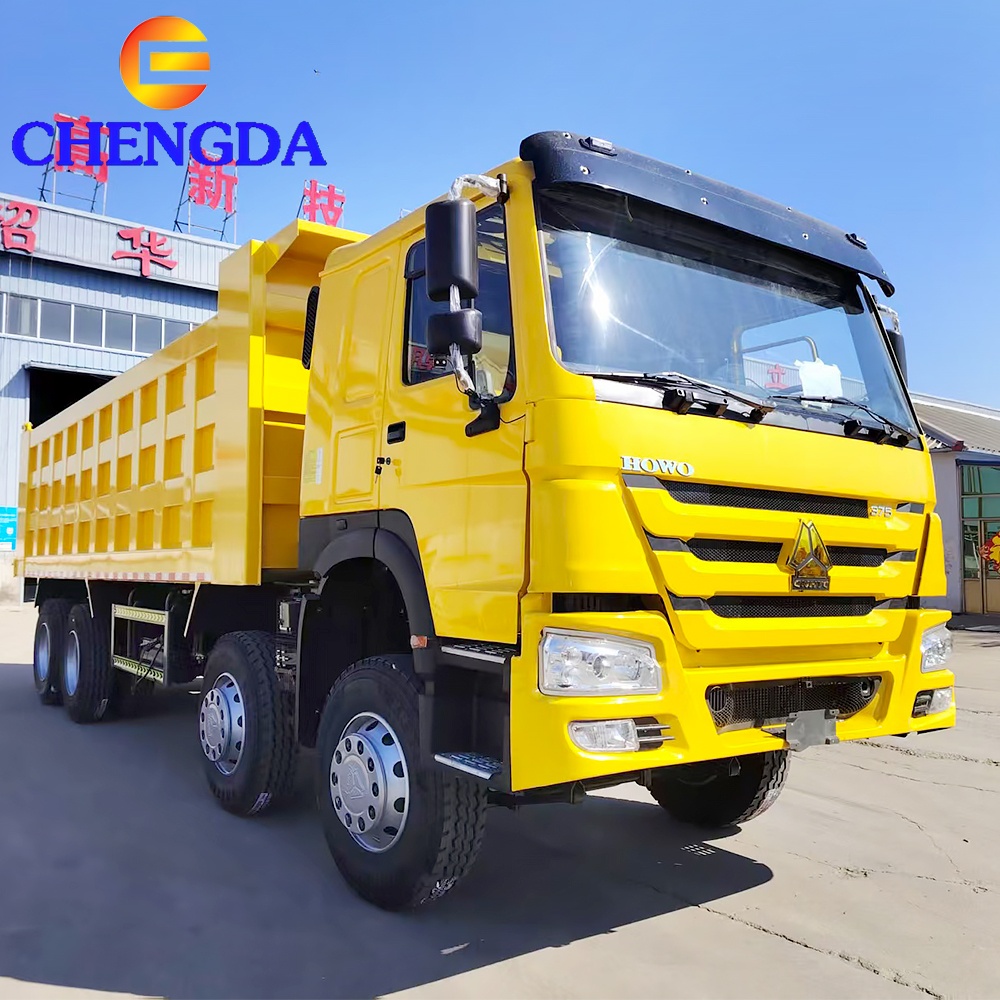
The Middle Path: Reconditioned Used Trucks with Basic Warranty
Between brand-new and sold-as-is, a third category is worth knowing about. Some professional exporters supply inspected and reconditioned used trucks that carry a short-term warranty — typically covering the engine, transmission, and hydraulic system for a limited period after delivery. A used HOWO 8×4 dump truck that has had worn parts replaced, passed a multi-point inspection, and comes with even a basic guarantee splits the difference: cheaper than ordering new, less risky than buying a used unit with no seller accountability. The price sits between the two extremes, and for many project owners, that middle ground hits the sweet spot between budget and peace of mind.
Wrapping Up
There is no universal answer to the new-versus-used question. A factory-ordered HOWO dump truck is the right choice for a multi-year mining haulage contract where predictable costs and maximum uptime are the top priorities. A carefully selected used unit makes sense for a short-term road-building job where keeping initial capital expenditure low is the overriding concern. The disciplined approach is to evaluate your project's specific profile — duration, budget structure, maintenance capability, and tolerance for risk — and let those facts steer the decision, rather than defaulting to whichever option looks cheaper on the surface.
Working with an exporter who can supply both new factory orders and inspected used units gives you the flexibility to make that call project by project, without being locked into one approach.
For pricing and availability on new and used HOWO, Shacman, and Foton dump trucks — including freight options to your preferred port — reach out to Shandong Chengda Truck Trailer Co., Ltd.